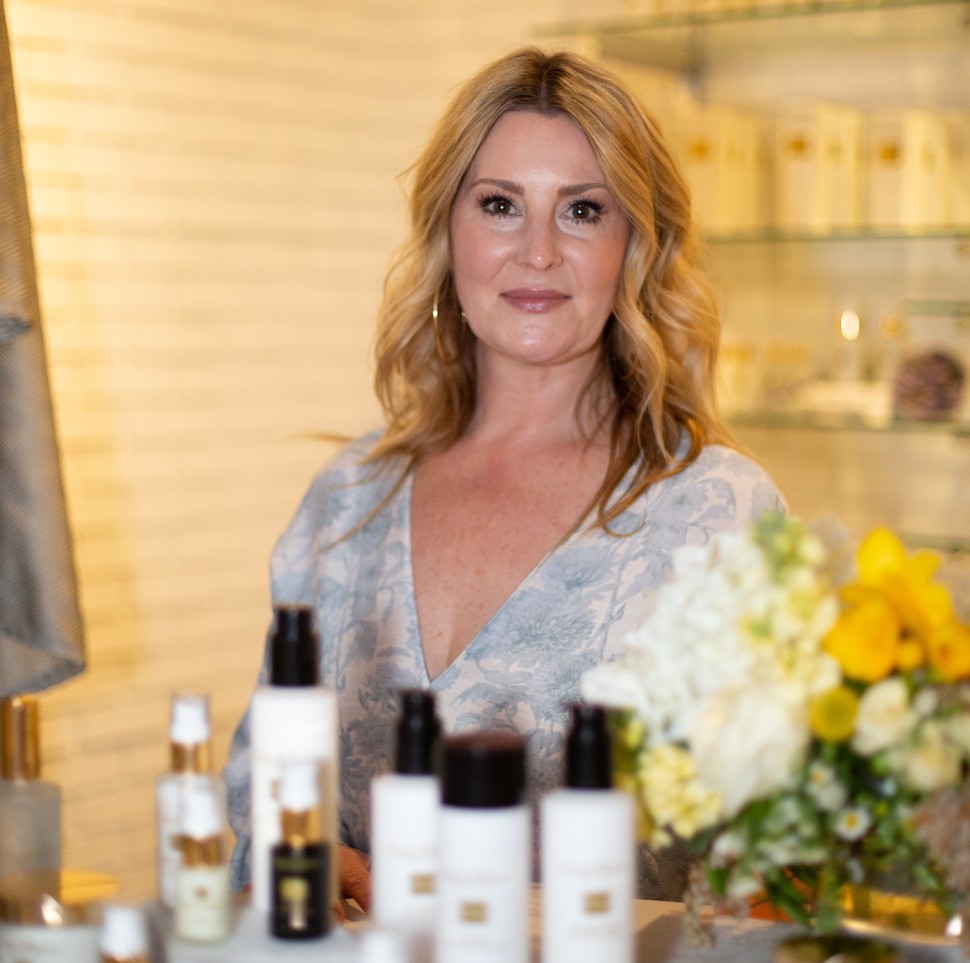
Few professionals have watched the skincare industry evolve as closely as Diane Hibbard. After more than 30 years in the treatment room and two decades at Burke Williams, the Chief of Treatments and creator of Burke Williams H2V Skincare, Hibbard has helped shape countless facial protocols, products, and estheticians along the way. We spoke with her about the meaning of “skin longevity,” separating hype from science, and where professional skincare is headed next.
“Skin longevity” is everywhere right now. Beyond marketing, what does it actually mean to you as a skincare professional?
As a skincare professional, “skin longevity” or healthy aging is about taking a proactive approach to extend the life and function of healthy skin cells while narrowing the gap between your chronological age and your skin’s biological age. This means addressing both intrinsic aging (the natural aging process that occurs within the body) and extrinsic aging (environmental factors such as UV exposure, pollution, and lifestyle choices) through a combination of proper nutrition and targeted topical skincare.
Our H2V Youth Cell Activator supports this approach with key ingredients that help combat glycation, a major contributor to intrinsic cellular aging, activate stem cell activity to promote DNA repair and healthy cell production, and replenish ceramides to strengthen the skin barrier for improved hydration, radiance, and overall luminosity.
After more than 30 years in treatment rooms, what’s the biggest misconception people have about healthy skin?
The biggest misconception is that healthy skin is achieved through quick fixes, viral trends, or occasional treatments. In reality, lasting skin health comes from consistency. Professional treatments can create incredible results, but they’re only part of the equation. Daily home care with recommended products tailored to your skincare needs and strong habits is what maintains those results and supports healthy skin over time.
Which current skincare trend do you think is genuinely advancing skin health—and which one is receiving more attention than it deserves?
One skincare trend receiving a lot of attention is the use of heavily occlusive products (passive protection) that simply create a barrier to lock in moisture or block out irritants. While they can help reduce water loss, they don’t actively improve skin health and may feel too heavy for some skin types.
A better approach is choosing products that both support the skin barrier and deliver beneficial ingredients (active skin health). Choose products that combine barrier-supporting hydration with powerful antioxidants and peptides to protect against environmental stressors while promoting healthier, more resilient skin.
“Healthy skin isn’t built through quick fixes or viral trends. It’s built through consistency.”
You develop professional facial protocols. How has the ideal relationship between in-spa treatments and at-home skincare changed over the past decade?
Over the past decade, social media has had a significant impact on the relationship between in-spa treatments and at-home skincare. Viral trends can often lead skincare enthusiasts toward gimmicky solutions or unrealistic expectations.
Burke Williams takes pride in its rigorous training program, empowering estheticians with the knowledge to combine science, advanced ingredients, and personalized recommendations. This allows us to guide guests toward evidence-based skincare choices that deliver meaningful, long-term results.
We’re hearing more about circadian rhythms in skincare. Is the science compelling enough to change how people should approach their morning and evening routines?
I like to think of the skin’s circadian rhythm like a sporting event with two key strategies: defense and offense. In the morning, the skin is focused on protection, working to defend against environmental stressors. That’s when antioxidant serums and broad-spectrum sunscreen become essential players, helping protect the skin throughout the day.
In the evening, the skin shifts into repair and renewal mode. This is when regenerative formulas, such as retinoids, peptides, or glycolic acid serums, can take center stage, supporting the skin’s natural recovery process and promoting healthier, more resilient skin.
If you could simplify someone’s skincare routine to the essentials, what would stay—and what would you encourage them to stop buying?
Tinted sunscreen—you can save money and create your own by adding a drop of your foundation into your favorite sunscreen. I encourage keeping the products you consistently use and love, while letting go of those that have been sitting untouched in your cabinet for months.
Looking ahead, what do you believe will define the next generation of professional skincare: ingredients, technology, personalization, or something else entirely?
With the advancement of AI, I believe the next generation of skincare will be defined by more knowledgeable professionals and more informed consumers. While these tools will create incredible opportunities for education, personalization, and innovation, they also introduce challenges as we enter an era of rapidly emerging injectables, supplements, and treatments that may not always have the level of research needed to support their claims.
The role of the educated esthetician will become more important than ever. Professionals who follow science-backed protocols, prioritize guest safety, and understand the relationship between ingredients, treatments, and long-term skin health will be essential in guiding consumers toward effective and responsible skincare choices.

Mary Bemis
A pioneering voice in spa and wellness journalism, Mary Bemis has spent four decades chronicling, championing, and helping shape the modern spa industry. As Founder and Editorial Director of Insider’s Guide to Spas, she brings a distinctive editorial perspective informed by a career that has helped define the language and landscape of spa media. Mary launched American Spa magazine in 1997, co-founded Organic Spa, and helped launch Luxury SpaFinder and NewBeauty. Her industry leadership extends to board service with ISPA, NYSPA, and WSPA, the latter two organizations she helped establish. She has also served as Special Advisor to the Balneology Association of North America. Today, she serves as Special Advisor to Global Wellness Day and sits on the board of the International Sauna Aid Foundation. Recognized among Medika Life’s Top 30 Influential Voices Transforming Wellness, Mary is also a recipient of the prestigious ISPA Dedicated Contributor Award, an inaugural Folio Top Women in Media honoree, and an American Spa Wonder Woman of Wellness. Her mission remains as steadfast as ever: to keep spa culture alive and relevant, honor its roots, challenge its shortcomings, and inspire an industry to live up to its promise.
- Web |
- More Posts(91)